A Symbolic Capsule-Laying Ceremony Marks a New Chapter for the Ignalina Nuclear Power Plant
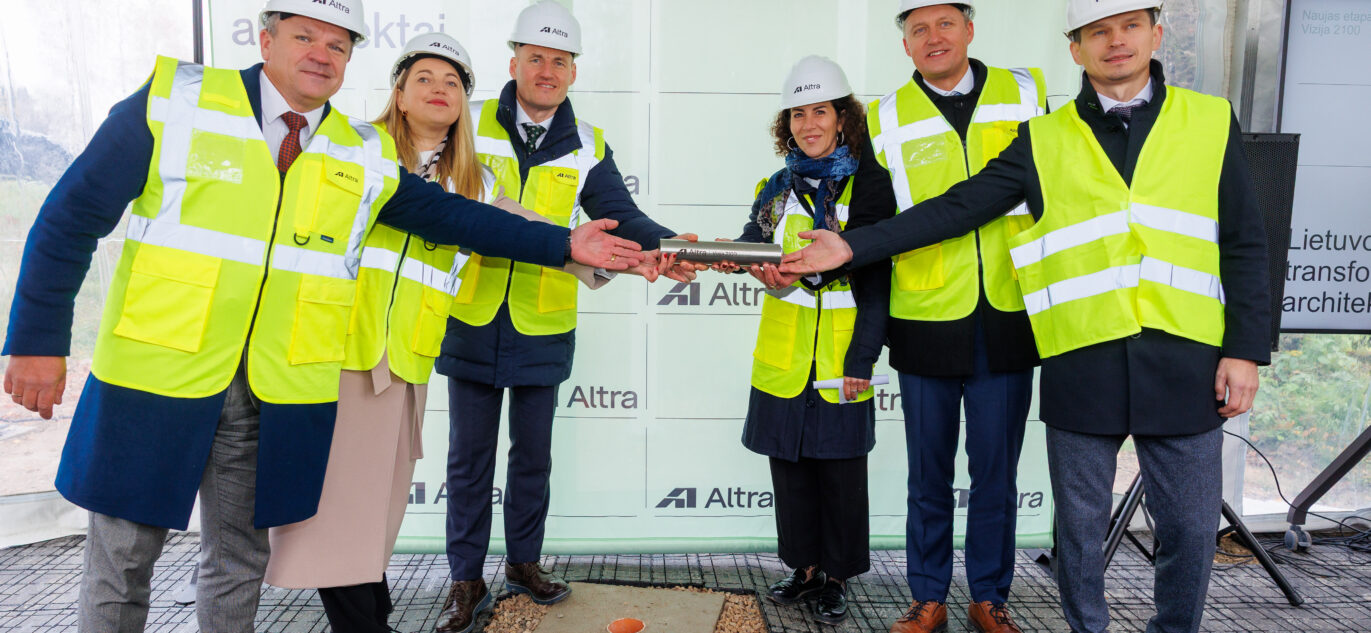
A new near-surface repository for short-lived low- and intermediate-level radioactive waste will be constructed next to the Ignalina Nuclear Power Plant (INPP). This facility is essential and one of the most important new infrastructure elements required for the decommissioning of the power plant.
“Construction of the new repository marks steady progress in fulfilling Lithuania’s commitments and demonstrates a responsible approach to managing our nuclear legacy. Although this process has faced various challenges, it is now entering the implementation phase. The shutdown of the Ignalina Nuclear Power Plant did not mark the end of the nuclear energy cycle. Lithuania is now in the final stage – waste management – where the key priority is ensuring safe and efficient handling of the legacy created over decades of nuclear operations,” notes Minister of Energy Žygimantas Vaičiūnas.
This symbolic capsule-laying ceremony also marks a new chapter: from now on Ignalina Nuclear Power Plant will operate under its new activity brand – Altra, a name reflecting the transformation of Lithuania’s nuclear sector.
“From today, this mission is carried out by Altra – the team of Lithuania’s nuclear transformation architects. Our work extends far beyond decommissioning the former nuclear power plant and managing radioactive waste. It also includes developing the necessary new infrastructure, implementing advanced technologies, and applying international best practices and the highest safety standards. The new near-surface repository is a crucial part of this infrastructure, ensuring the final disposal of low- and intermediate-level radioactive waste. It is not only an engineering facility but also a technological step that will allow the transformation of the Ignalina plant into a safe and environmentally neutral site,” says Linas Baužys, Head of Ignalina Nuclear Power Plant, now operating under the Altra brand.
The new repository will be a modern facility that meets the highest European radiation safety and environmental protection requirements. Equipped with an advanced monitoring system, it will provide safety for 300 years—until the waste becomes harmless to people and the environment. This will be the second final disposal repository on the INPP site; the first, for very low-level waste, is already operational and will retain its waste safely for about 100 years.
Decommissioning progress
According to L. Baužys, the symbolic capsule-laying marks not only the start of a new nuclear infrastructure project but also the continued progress of Lithuania’s nuclear decommissioning programme. “To date, we have dismantled almost half—44%—of the power plant’s equipment. A significant share of this material—no less than 75%—is returned to the economic cycle for secondary use. The repository for very low-level waste is already being filled, while more radioactive waste is being accumulated in temporary storage. From 2029 onwards, this waste will be placed in the new repository now under construction, which we plan to fully fill by 2040,” he says.
The new facility will receive waste generated during dismantling of the power plant—various metal pipes, structures, technological equipment, cooling system components, as well as solidified liquid waste and conditioned solid waste removed from legacy storage facilities and produced during plant operations. It is intended for radioactive waste that cannot be fully decontaminated or whose decontamination is not economically justified.
The repository will consist of three groups of vaults; two are currently under construction, together with all necessary systems for receiving, characterising, and safely placing waste packages. A technological building with a concrete batching unit will be built on site to allow waste containers to be encapsulated.
Each package will weigh around 15 tonnes, and a total of approximately 11,500 packages will be placed in the repository. During operation, the facility will employ around 30 specialists, while construction work will involve more than 100 workers.
Highest safety standards and international expertise
The new near-surface repository stands out for being designed in accordance with the highest European radiation safety and environmental requirements. The repository concept was prepared by the French National Radioactive Waste Management Agency (ANDRA), whose similar—but ten times larger—repository has been successfully operated in France. The facility includes a multi-layer above-ground concrete structure resistant to external impacts, including earthquakes and even extreme scenarios such as an aircraft crash.
The repository is being constructed on a 45-hectare site next to other INPP radioactive waste management facilities by PST Group. Project development oversight is provided by TEC Industry, and TAEM Group will deliver technical supervision services.
The site in Stabatiškės, Visaginas Municipality, was selected in accordance with the Environmental Impact Assessment report, with the goal of minimising transportation time and risk—waste will not need to be transported outside the INPP territory, and all nuclear-related infrastructure will be located in one area.
A modern environmental monitoring system will be installed on site, including air, soil and water monitoring, dedicated observation boreholes, and a meteorological station. A full-scale engineering model of the repository will also be constructed to allow researchers to test engineering solutions under real conditions. Results from these tests will be available by early 2029.
Funding and project timeline
The project value is EUR 128 million (excluding VAT). It is jointly financed by the European Commission’s Ignalina Programme and the Lithuanian state budget. EU funding is administered by the Central Project Management Agency (CPMA).
Construction is scheduled for completion by the end of 2028, with repository operation beginning in early 2029. Waste emplacement will continue until 2040, followed by a 300-year monitoring period—100 years of active monitoring and 200 years of passive monitoring, with restrictions on land use.
About Altra
The legal name of the Ignalina Nuclear Power Plant remains unchanged; however, the organisation has introduced a new activity brand—Altra. This is the new identity for the operational activities of the plant. Altra represents the team of Lithuania’s nuclear transformation architects. We ensure the responsible management of the legacy of decades of nuclear operations—but we do much more. We are shaping a vision extending to the year 2100 and laying the foundations for the next nuclear energy cycle and future projects.
What does the name Altra represent?
▪️ Alter (Latin) – other, second; meaning transformation without becoming something entirely different.
▪️ LT – a reference to Lithuania and our responsibility for its safe and clean future.
▪️ RA – a subtle reference to radioactive waste, the responsible management of which is a core part of our mission.