Altra Begins Design of Temporary Radioactive Waste Storage Facility Essential for Reactor Dismantling
Ignalina Nuclear Power Plant, operating under the Altra brand, has signed a contract worth €9.35 million (excluding VAT) for the design of a Temporary Reactor Waste Storage Facility. The facility will be designed by an international consortium led by Cyclife Engineering S.A.S., together with Westinghouse Electric Spain S.A.U. and TEC Industry UAB.
The signing of the contract marks the beginning of a new phase in one of Altra’s priority projects. The design work will establish the technical and safety solutions for a temporary reactor waste storage facility, which is essential for the future dismantling of the reactor cores of Ignalina Nuclear Power Plant’s two RBMK-1500 reactors.
“The dismantling of the reactors at Ignalina Nuclear Power Plant is an unprecedented project worldwide. Designing the temporary radioactive waste storage facility is an important part of this undertaking, helping to ensure that the nuclear legacy is managed safely without passing the burden on to future generations,” said Lukas Savickas, Lithuania’s Minister of Energy.
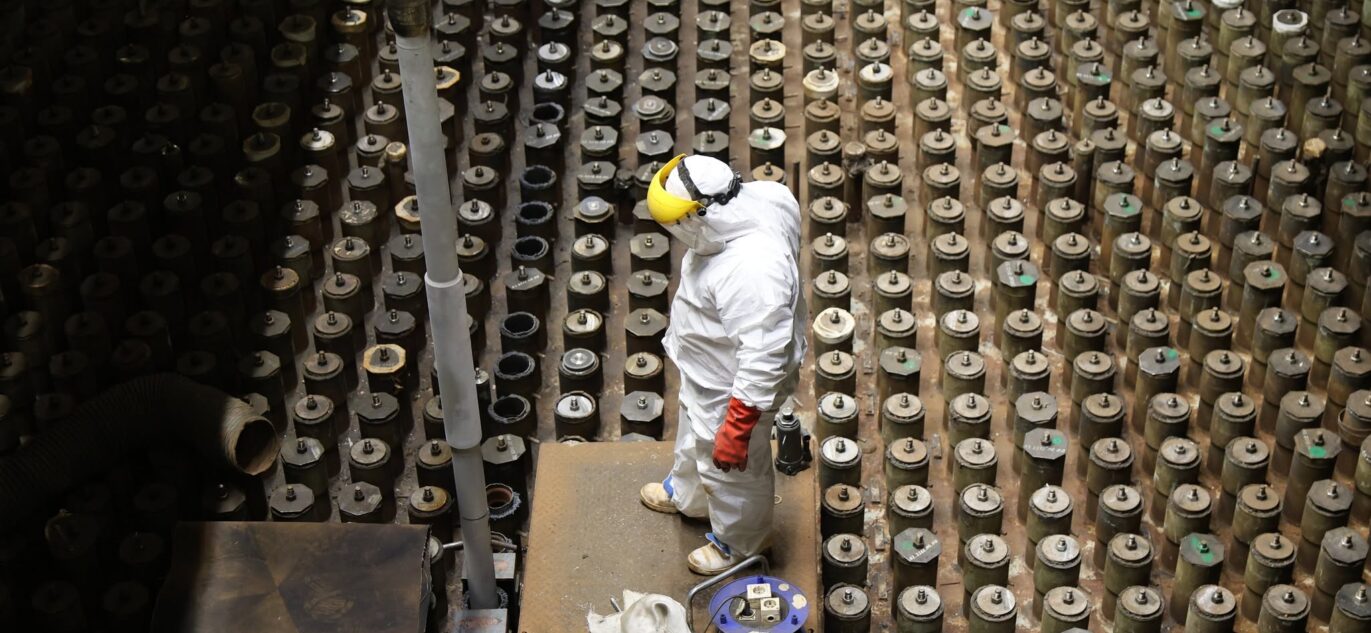
Dismantling the reactor cores is the most technically challenging part of the entire Ignalina Nuclear Power Plant decommissioning megaproject. These operations will generate long-lived radioactive waste, primarily radioactive graphite and activated metal. Existing storage capacity is insufficient to accommodate the total anticipated volume. It is therefore essential to prepare the necessary infrastructure for safe waste storage in advance by expanding the existing solid radioactive waste treatment and storage complex.
“The dismantling of the reactors at Ignalina Nuclear Power Plant is an unprecedented undertaking that requires us to prepare for the entire process as an integrated technological operation. It is not enough simply to plan how the reactor structures will be dismantled. We must also determine in advance how every resulting waste package will be treated, inspected, recorded and stored.
“This contract therefore represents much more than the start of design work. It paves the way for specific engineering solutions that will be crucial to ensuring the safe and systematic implementation of the entire reactor dismantling phase,” said Linas Baužys, CEO of Altra.
The design work is expected to be completed by mid-2030, with construction scheduled to begin in 2031. The facility is provisionally expected to be ready for operation in 2036.
“The storage facility must be ready before the dismantling of the reactor structures begins. This will allow the resulting waste to be properly treated, packaged and safely stored until its final disposal in a deep geological repository. This is a key project on the critical path of the overall Ignalina Nuclear Power Plant decommissioning programme,” Mr Baužys emphasised.
Designing an Integrated Waste Reception and Storage System
The Temporary Reactor Waste Storage Facility is planned to be established on Altra’s site in Visaginas Municipality. The project will make use of existing infrastructure by modifying the radioactive waste treatment and storage complex, including the expansion of existing radioactive waste storage facilities and the waste treatment facility.
This approach will allow Altra to make use of its operational radioactive waste management infrastructure, existing engineering systems and the expertise accumulated by its specialists.
The designers will carry out the necessary investigations, prepare the building reconstruction design, develop the technological and engineering systems, and produce the documentation required to demonstrate safety and obtain the necessary permits. The consortium will also supervise the implementation of the design during construction.
The facility will incorporate systems for receiving, inspecting, transferring, monitoring and storing radioactive waste packages. Its precise storage capacity, layout and other technical parameters will be determined during the design phase, taking into account the characteristics of the future waste, the types and quantities of waste packages, and the planned sequence of reactor dismantling activities.
Temporary Storage Before Final Waste Disposal
The facility will be designed for the safe storage and monitoring of long-lived radioactive waste prepared in specially designed packages. The waste is expected to remain there until it can be transferred to the deep geological repository planned for development in Lithuania.
The temporary storage facility and the deep geological repository will serve different purposes. The temporary facility will provide monitored storage for a limited period, while the deep geological repository will be intended for the final disposal of spent nuclear fuel and other long-lived radioactive waste.
The signing of the design contract does not mean that construction is beginning. The first steps will involve preparing the design and supporting safety documentation, carrying out the necessary investigations and assessments, and obtaining the required permits. Only then can the procurement process for construction works begin.
Once the facility has been constructed, its systems will be tested, and operational procedures and staff readiness will be verified. Radioactive waste packages will only be accepted once the facility has been confirmed to meet all applicable safety requirements.
The design services contract is valued at €9,350,934.63 excluding VAT. The project is financed by the International Ignalina Decommissioning Support Fund, administered by the European Bank for Reconstruction and Development (EBRD).
About Altra
Altra’s primary objective is to safely decommission Ignalina Nuclear Power Plant in Lithuania and ensure that the burden of radioactive waste management is not passed on to future generations.
Throughout the decommissioning project, approximately 180,000 tonnes of equipment and associated structures are expected to be dismantled, along with the management of approximately 1.7 million cubic metres of reinforced concrete structures.
Following appropriate treatment, most of the materials, at least 78%, are returned to the secondary raw materials cycle. Radioactive waste is managed and disposed of in dedicated repositories in accordance with the highest safety standards and international requirements.