“Altra” Operational Strategy Approved: Direction Until 2034, Vision Through 2100
Press releases
Ignalina Nuclear Power Plant, operating under the name “Altra”, has approved its operational strategy until 2034, establishing a long-term company vision extending to the year 2100. The strategy expands not only the planning horizon but also the company’s areas of activity, with the ambition of becoming a European benchmark for a sustainable nuclear cycle.
“Nuclear energy projects are always measured in decades, and often even in centuries. Lithuania has accumulated more than four decades of experience in this field; therefore, our decisions must be oriented toward long-term perspectives and the consistent strengthening of competencies. The new ‘Altra’ strategy ensures the responsible completion of the decommissioning of Ignalina Nuclear Power Plant while also creating opportunities for Lithuania to develop its nuclear potential in the context of future energy,” notes Minister of Energy Žygimantas Vaičiūnas.
Alongside the strategy, the company’s mission has also been updated – shifting from the safe management of nuclear legacy to a broader commitment: “to safely and sustainably manage the nuclear cycle.” This means fully completing nuclear legacy management and transforming accumulated experience into a center of nuclear excellence.
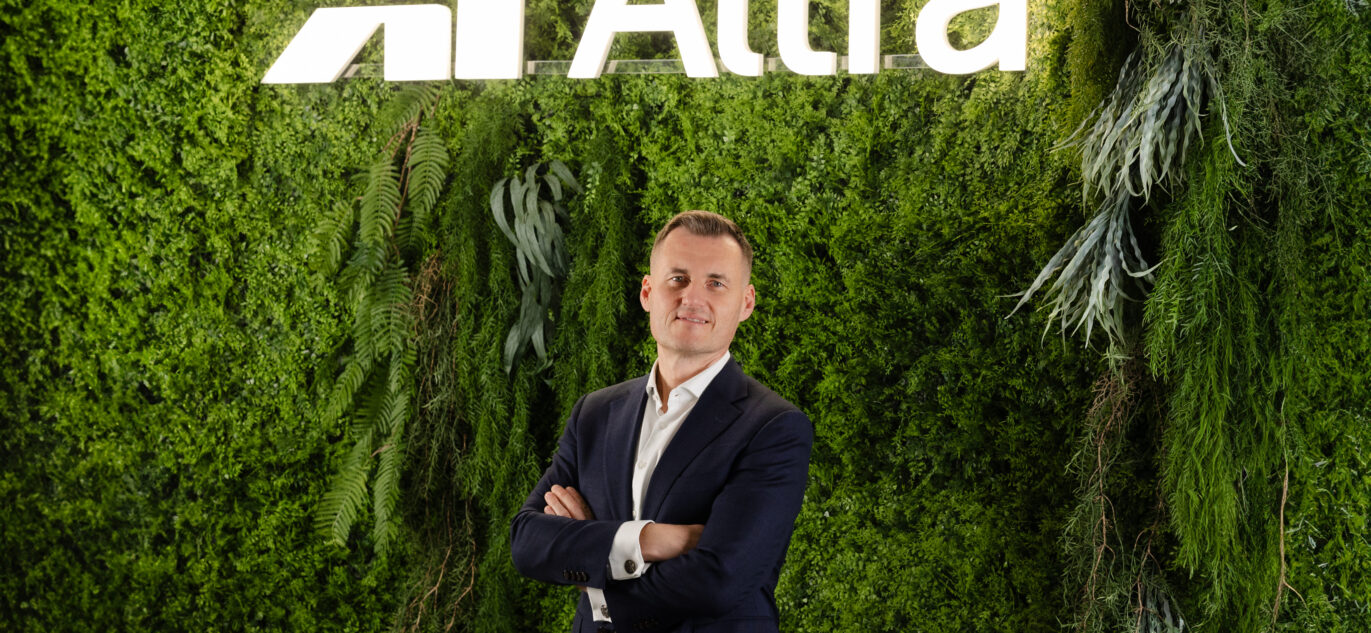
“This is the first strategy of such long-term scope not only in the company’s history but also in Lithuania’s history. Until now, operational planning was closely linked to European Union funding periods. However, the new strategy marks a qualitative shift – it is based on the logic of the full nuclear cycle and the long-term energy vision of the state. This strategy solidifies our transformation – from a decommissioning project implementer of Ignalina Nuclear Power Plant to an advanced and sustainable nuclear energy competence center,” says ‘Altra’ CEO Linas Baužys.
The strategy outlines three ambitions defining the organization’s direction until 2100.
The first ambition covers the strategic period until 2034. During this time, the organization’s role as a reliable partner to the state in planning and implementing nuclear energy solutions will be strengthened. Key objectives include progress within the current funding period, ensuring steady advancement in decommissioning works, and the successful selection of partners for the most complex dismantling stages. Efforts will also focus on defining the technological direction for small modular reactors (SMRs) and identifying priority areas for a deep geological repository.
The second ambition extends to 2050. By the end of this period, the full dismantling of Ignalina Nuclear Power Plant is planned, along with achieving climate neutrality (“net zero”), selecting the most suitable and safest site for a deep geological repository for spent nuclear fuel and other long-lived waste, and establishing the organization as a nuclear competence center.
The third ambition – the 2100 vision – is focused on the final management of nuclear legacy (operation and closure of the deep geological repository), the sustained operation of the nuclear competence center, and the integration of circular economy principles into the nuclear cycle.
The implementation of the strategy is based on three clear operational pillars ensuring consistent progress toward these ambitions: visible and measurable efficiency, strong business engagement in the megaproject, and an agile-based organizational culture.
“First, we aim for clear and measurable efficiency – optimizing processes, shortening the megaproject’s critical path, and ensuring implementation within ambitious timelines and allocated funding. Second, we are strengthening contractor, supplier, and partner engagement by increasing project openness and collaboration. Third, we are purposefully transforming our organizational culture by implementing agile principles that promote accountability, flexibility, and innovation. Consistent work in these areas enables us to move toward the long-term 2100 vision,” emphasizes L. Baužys.
Two Projects for Future Progress
The company links future energy progress with two strategically significant megaprojects that will ensure both the final management of Lithuania’s nuclear legacy and the development of new technologies for the energy future.
The deep geological repository project is considered a key solution for the final disposal of spent nuclear fuel and long-lived radioactive waste. Following numerous actions meeting the highest safety standards and international best practices, a final site must be selected and further implementation decisions prepared.
In the near future, a feasibility study on the development of small modular reactors is also planned, assessing the need for next-generation nuclear technologies, possible technological options, and financing models in Lithuania. These projects form the foundation for the long-term development of nuclear competence and responsible planning of the country’s energy future.
About the Company’s Activities
Today, one of the company’s main objectives is to implement immediate dismantling of the shut-down nuclear power plant without leaving unjustified radioactive waste management burdens to future generations.
Throughout the entire decommissioning period of Ignalina Nuclear Power Plant, 180,000 tons of equipment and related materials are planned to be dismantled. The total volume of demolition works and dismantled concrete will reach 1.7 million cubic meters. Approximately 78% of dismantled equipment and 94% of reinforced concrete, after decontamination, are returned to the secondary raw materials market, while radioactive waste is managed in accordance with the highest safety standards.
Four disposal facilities are planned to ensure proper and final radioactive waste management: a short-lived very low-level waste repository has already been constructed and is being filled; by 2027, a license is planned to convert the bituminized radioactive waste storage facility into a repository; by 2028, a new short-lived low- and intermediate-level waste repository is planned for construction; by 2070, a deep geological repository for spent nuclear fuel and other long-lived radioactive waste is intended to be established.
Surface repositories are and will continue to be constructed within the company’s territory in Visaginas Municipality. The final site for the deep geological repository within Lithuania is expected to be confirmed by 2049, constructed and operated until 2080. During this period, ‘Altra’ intends to establish itself as an advanced next-generation nuclear energy company and successfully continue its activities.