Altra completes reactor channel dismantling at Ignalina NPP Unit 1, receives licence to begin Unit 2 dismantling
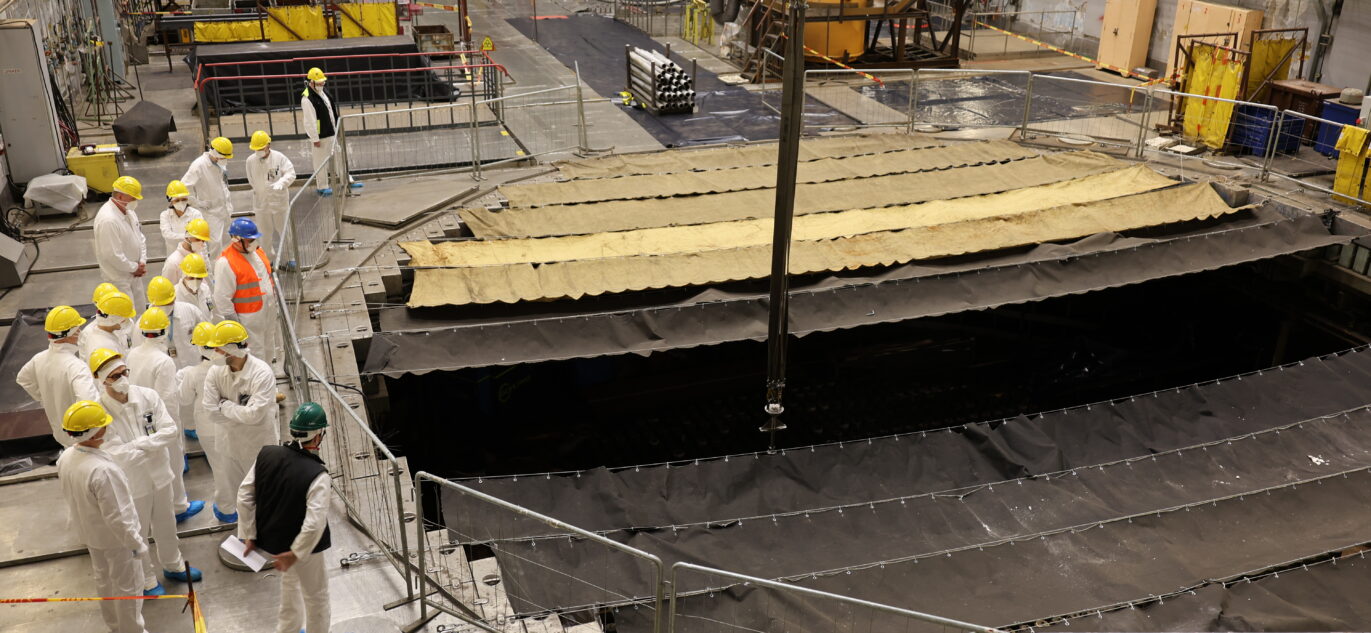
The State Nuclear Power Safety Inspectorate (VATESI) has issued a licence authorising the dismantling and decontamination of the upper and lower reactor channel zone equipment of Unit 2 at the Ignalina Nuclear Power Plant (INPP). This marks one of the most significant milestones in the plant’s decommissioning programme, signalling the transition from the technically demanding dismantling works on the first reactor to those on the second.
The dismantling of the reactor channels at Unit 1 has now been completed. The licence for Unit 2 ensures the continuity of the dismantling programme and enables the systematic progression of work on both reactors.
“No one in the world has ever dismantled a nuclear power plant of this size and with this level of radioactive contamination. Moving on to Unit 2 is a major step forward in the Ignalina Nuclear Power Plant decommissioning megaproject. We completed approximately two-thirds of the dismantling of the first reactor using our own in-house capabilities. The most technically complex and radiologically hazardous phase – the dismantling of the reactor cores – still lies ahead and will be carried out with the support of external contractors. The experience gained during the dismantling of Unit 1 gives us confidence as we move forward with Unit 2. Some of the work is performed using remote-controlled and robotic technologies to ensure the highest safety standards,” says Linas Baužys, Head of Altra.
The decommissioning of Lithuania’s former nuclear power plant is being carried out using the immediate dismantling strategy, meaning that dismantling activities begin without a prolonged safe enclosure period, making full use of existing expertise and technologies. The dismantling of redundant systems and equipment has been underway since 2010, and overall decommissioning progress has now reached 45.7%.
The final dismantling of the reactors, including the highly complex dismantling of the reactor cores, is planned to be completed by 2043. All decommissioning activities, including the final restoration of the reactor buildings, are expected to be completed by 2050.
Later this year, Altra also plans to begin the dismantling and decontamination of the steam drum separators in both reactor units. This is another large-scale and technically demanding project involving the removal of steam drum separators—massive cylindrical components measuring nearly 3 metres in diameter and approximately 30 metres in length. There are eight such components across the two reactor units, with a combined weight exceeding 6,000 tonnes.
Four disposal facilities planned for radioactive waste
A strong emphasis is placed on the efficient management of dismantled materials. Following decontamination, approximately 78% of dismantled equipment and 94% of reinforced concrete is returned to the secondary raw materials market, reducing the volume of radioactive waste and the long-term burden on future generations. Over the course of the decommissioning programme, approximately 180,000 tonnes of equipment are expected to be dismantled.
“When discussing a sustainable energy future, we increasingly use the concept of energy stewardship (#energosauga). It reflects our core principle: managing energy resources and the consequences of their use responsibly so that today’s decisions are safe, sustainable and focused on future generations. We do not want to leave radioactive waste as a legacy for future generations. That is why we are seeking the world’s most efficient and advanced solutions for managing the radioactive waste accumulated throughout the lifetime of the nuclear power plant,” emphasises L. Baužys.
Four disposal facilities have been planned to ensure the safe and final management of radioactive waste. A repository for very low-level short-lived radioactive waste has already been constructed and is currently in operation. In 2027, the company plans to obtain a licence to convert the bituminised radioactive waste storage facility into a disposal facility. By 2028, construction is expected to be completed on the new repository for short-lived low- and intermediate-level radioactive waste, which is currently under development. By 2070, Lithuania plans to establish a deep geological repository for the disposal of spent nuclear fuel and other long-lived radioactive waste.
The near-surface repositories are located, and will continue to be developed, within the company’s site in the Visaginas Municipality. The location of Lithuania’s future deep geological repository is expected to be confirmed by 2049, with construction and commissioning planned by 2080. During this period, Altra aims to strengthen its position as an advanced next-generation nuclear energy company and continue its successful operations.