“Altra”: International Contractors to Begin Dismantling Work in the INPP Controlled Area for the First Time
International cooperation
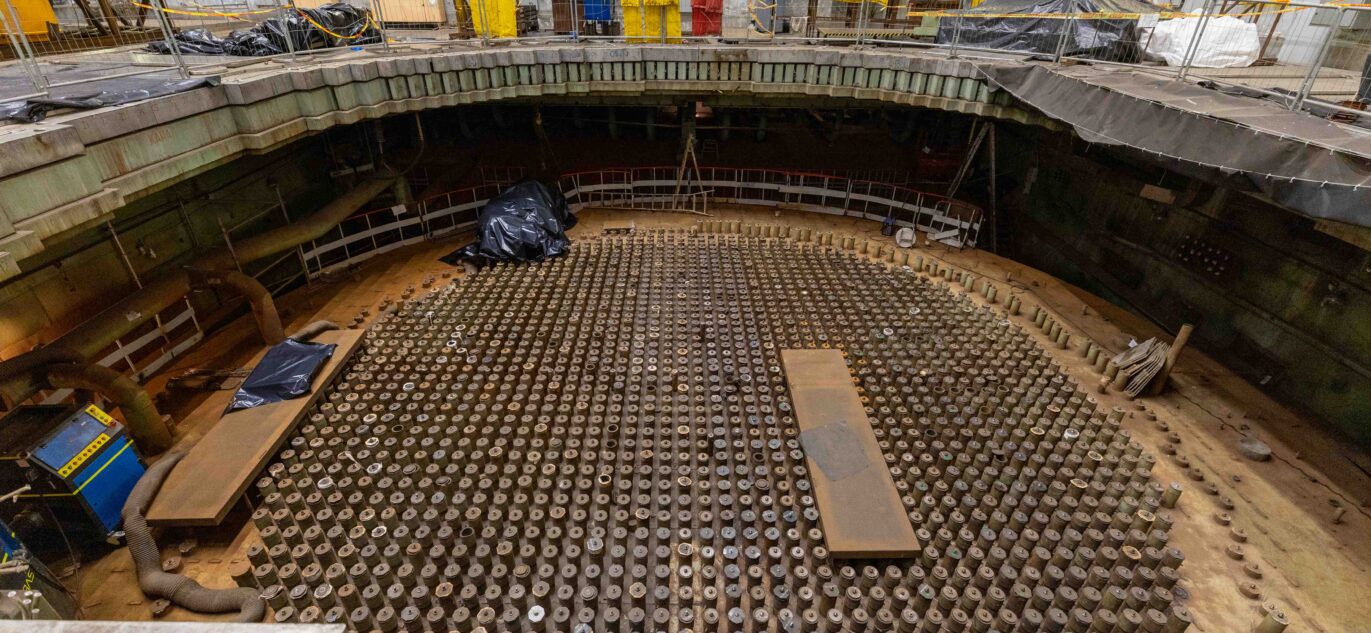
This summer, “Altra” is entering a new phase in the decommissioning of the Ignalina Nuclear Power Plant (INPP): for the first time, dismantling work in the plant’s controlled area will be carried out by international contractors specialising in complex nuclear engineering projects. They will begin work on one of the most technically challenging projects of the decommissioning programme — the dismantling of steam drum separators in both power units.
The work will be carried out by a consortium of Westinghouse Electric Sweden AB and Westinghouse Electric Spain, S.A.U., selected through an international tender in 2024. Technical supervision of the project is being provided by Amentum Clean Energy s.r.o. The contract was awarded following an international tender in which technical proposals were submitted by some of the largest companies and consortia in the global nuclear energy market, representing Sweden, Spain, France, Finland, Germany and Slovakia.
The dismantling of steam drum separators is considered one of the most technically complex tasks in the decommissioning of the Ignalina Nuclear Power Plant. Each unit is approximately 30 metres long and nearly 3 metres in diameter. There are eight such units installed across the two power units, with a combined weight of approximately 6,000 tonnes, including associated piping and equipment.
“We carried out the dismantling of the upper and lower reactor channel zones in Unit 1 using our own resources, gaining unique experience in the process. However, the decommissioning project has now reached a stage where we are dealing with work that requires highly specialised competencies, dedicated equipment and international experience. This is why we are engaging international partners for such complex work in the controlled area. Their accumulated expertise and advanced technological solutions will enable us to continue the most challenging stages on schedule, efficiently and, above all, safely,” says Linas Baužys, CEO of “Altra”.
L. Baužys emphasises that, in carrying out the dismantling of Lithuania’s former nuclear power plant, priority is given to organising work using the company’s own resources. To this end, most long-serving employees have been retrained, while newly recruited employees receive the necessary training. However, the dismantling of steam drum separators is one of the most complex stages of the entire project. It requires highly specialised competencies, dedicated equipment and practical international experience gained through similar projects at other nuclear power plants. International partners are therefore engaged specifically for this work, bringing the required expertise, technological solutions and equipment.
The first stage of the project will focus on preparations for the main dismantling works. This summer, the work will begin with employees of Westinghouse Electric Sweden AB and Westinghouse Electric Spain, S.A.U., together with their subcontractor, Slovak company ROBO Piešťany, which has extensive experience in the nuclear energy sector. The company’s specialists have participated in the decommissioning project at Bohunice Nuclear Power Plant and are bringing valuable knowledge and practical experience to Lithuania for the most complex dismantling work at nuclear facilities.
Special infrastructure will be installed at the plant to support work in radiologically controlled areas. This will include prepared workstations, reinforced structures, platforms for specialised equipment and operator workstations, as well as temporary storage areas for components and materials generated during dismantling.
Specialised dismantling equipment will also be delivered to the plant, including remotely operated robots and other technological solutions designed for work in challenging radiation conditions. Due to the increased radiation risk, a significant share of operations will be carried out remotely, with processes controlled from specially equipped operator workstations.
According to L. Baužys, preparations for dismantling are comparable in scale to a separate project. Before the main work can begin, the plant’s infrastructure must be adapted for remotely operated equipment, dedicated work areas must be installed, the safe movement of dismantled components within the plant must be ensured, and temporary storage solutions must be put in place.
By the end of May this year, 83,357 tonnes of equipment and structures had already been dismantled at the Ignalina Nuclear Power Plant — 46.3% of the total planned dismantling volume.
More about “Altra”
Today, one of the company’s main objectives is to implement the immediate dismantling of the permanently shut-down nuclear power plant without leaving future generations an unjustified burden of radioactive waste management. Over the entire decommissioning period of the Ignalina Nuclear Power Plant, 180,000 tonnes of equipment and associated materials are planned to be dismantled. The total scale of demolition work and the volume of concrete to be dismantled will amount to 1.7 million cubic metres.
Following decontamination, approximately 78% of dismantled equipment and 95% of reinforced concrete is returned to the secondary raw materials market, while radioactive waste is managed in accordance with the highest safety standards. Four disposal facilities are planned to ensure the proper and final management of radioactive waste: a near-surface repository for very low-level short-lived radioactive waste has already been constructed and is in operation; a permit to convert the bituminised radioactive waste storage facility into a repository is planned for 2027; a new repository for short-lived low- and intermediate-level radioactive waste is planned to be constructed by 2028; and a deep geological repository for spent nuclear fuel and other long-lived radioactive waste is planned by 2070.
Near-surface repositories are and will continue to be constructed on the company’s site in the Visaginas Municipality. A final single site for the deep geological repository in Lithuania is planned to be approved by 2049, with the repository expected to be constructed and operated by 2084. During this period, “Altra” aims to establish itself as an advanced next-generation nuclear energy company and continue developing its activities successfully.